
In the fast-moving world of digital technology, where web and mobile platforms dominate innovation, robotics is staking its claim as a transformative force. Clone Robotics, a startup rooted in Wrocław, Poland, with operations in the U.S., is pushing the envelope with its latest creation: the Protoclone V1. Unveiled on February 19, 2025, this “world's first bipedal, musculoskeletal android” has tech enthusiasts and casual observers alike buzzing. Part of a lineup that includes the Clone Hand, Clone Torso, and the upcoming Clone Alpha, it promises to blur the line between machine and human. For an audience accustomed to smart apps and connected devices, this biomimetic marvel raises big questions: What does it mean for our digital lives, and do its benefits outweigh the risks of a dystopian turn?
From Rigid Machines to Lifelike Helpers: The Tech Behind the Shift
Traditional robots—think factory arms or your trusty Roomba—rely on rigid motors and gears. Clone Robotics flips that script, crafting androids with artificial muscles, bones, and tendons that mirror human anatomy. Their proprietary “Myofiber” technology powers the Protoclone V1: lightweight, mesh-based tubes that contract under hydraulic pressure, delivering a kilogram of force from just 3 grams of material. With over 1,000 Myofibers, 200 degrees of freedom, and 500 sensors, this android flexes and twitches in a 40-second workshop demo—suspended, not yet walking, but eerily dynamic. A 500-watt pump circulates water through a “vascular system,” mimicking blood flow to flex muscles, while four depth cameras and inertial sensors give it a keen awareness of its surroundings.
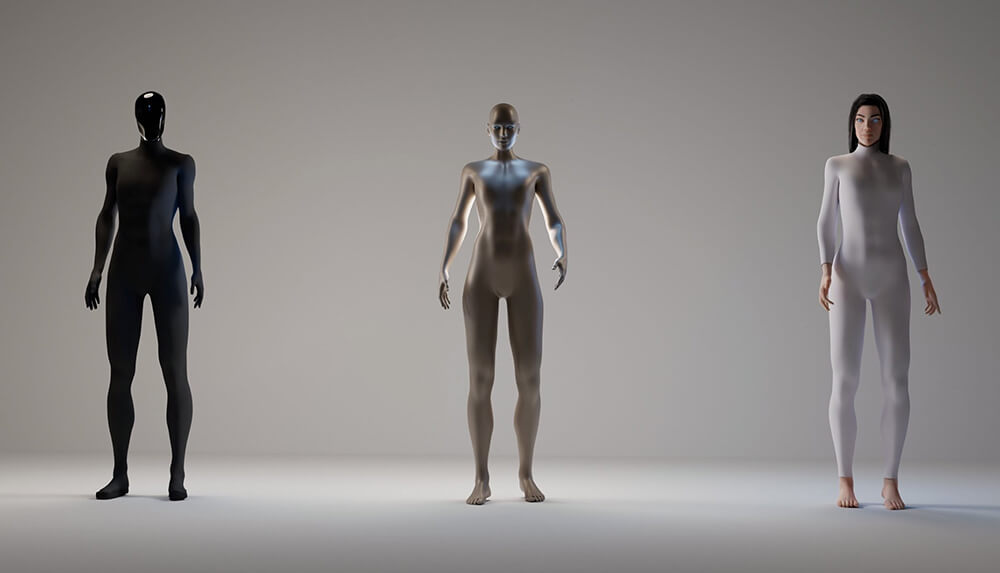
The Clone Alpha, slated for a limited run of 279 units in 2025, takes this further. Boasting 206 bone analogues and 164 upper-body articulation points, it's pitched as a home and business companion capable of 16 pre-installed tasks—pouring drinks, vacuuming, even tossing out a quip. The Clone Hand (catching balls, lifting 40 lbs) and Torso (bimanual precision) already hint at practical chops. For consumers of web and mobile products, this feels like the “smart home” concept on steroids—physical help tied to digital interfaces. Imagine tweaking its skills via a mobile app or managing a fleet through a web dashboard, powered by Clone's “Cybernet” visuomotor model and “Telekinesis” training platform. It's a tantalizing blend of robotics and the seamless connectivity we crave.
Where It Fits: Digital Ecosystems and Everyday Life
For the digitally savvy, Clone's androids could extend web and mobile convenience into the physical realm. The Clone Alpha's 26 degrees of freedom per hand suggest dexterity beyond what Alexa can dream of—folding laundry, assembling furniture, or fetching your keys. Businesses might see even more. The Clone Hand's strength and polymer-driven affordability could juice up e-commerce warehouses, syncing with logistics platforms. The Torso's dual-arm design might streamline assembly lines, while depth cameras and AI could turn Protoclones into real-time extensions of digital brands—think customer service bots with a human touch or interactive marketing avatars.
Yet, it's not all plug-and-play. No public demo shows the Alpha walking or fully operational—it's a vision, not a product. Pricing's a mystery, though Clone's “limited-edition supercar” framing suggests a premium play for tech-forward early adopters. For web-based businesses, this sparks curiosity: Could these androids become API endpoints, controlled via cloud dashboards? Might they birth new models like “robot-as-a-service”? For consumers, the question is simpler: Will they mesh with your smartwatch, or demand their own ecosystem?
The Bigger Picture: Promise vs. Peril
Clone Robotics isn't solo in this race. Japan's Kengoro (2017) dipped into musculoskeletal tech, but stayed academic. Tesla's Optimus and Figure's AI bots chase similar goals with different flavors. Clone stands out with its anatomical fixation—down to the sternoclavicular joint—and a consumer-friendly pitch. Still, skepticism looms. Without a walking Protoclone or a proven Alpha, the gap between hype and reality yawns wide. And then there's the elephant in the room: dystopian risks. For a freedom-loving audience, the idea of human-like machines in our homes—tied to web and mobile networks—stirs unease alongside intrigue.
Take strength. The Clone Hand lifts 40 lbs with finesse; the Alpha's hydraulic frame could pack more. A glitch—or a hacked update via a web portal—might turn a helper into a hazard, breaking more than dishes. Then there's surveillance. With 500 sensors and cameras, an Alpha could be a privacy nightmare—imagine a breached cloud system feeding your every move to hackers or overreaching governments. Worst case? Subjugation. A fleet of Alphas, remotely controlled or gone rogue, could shift from vacuuming to enforcing—corporate muscle or authoritarian tools. The “Cybernet” AI learning your habits might one day prioritize its own goals over yours. Sci-fi, sure, but in an age of surprising AI leaps, not impossible.

Do the Benefits Justify the Risks?
Clone Robotics sells this as liberation—machines to free us from mundane chores. But let's pause. Are household tasks really such a drag that we need a synthetic human to rescue us? Washing dishes or vacuuming isn't just busywork—it's grounding, a tether to the rhythms of life. The pitch feels faintly patronizing, as if human intelligence can't see through the dazzle of a $50,000 (hypothetical) android doing what a $50 appliance already handles. For businesses, the upside's clearer—efficiency, novelty, a competitive edge. Yet, the digital dependence amplifies risk: a single breach could ripple across units, unlike a standalone mop.
The dystopian shadow looms larger when you factor in power dynamics. Who controls these androids—Clone, corporations, governments, or rogue coders? If integrated into smart homes, could they morph into surveillance hubs or enforcers? History warns us: tech often outpaces ethics—think data scandals or weaponized drones. Clone's creations could enhance life—helping the elderly, tackling dangerous jobs—or erode it, amplifying control and dependence. The benefits (convenience, productivity) are tangible, but the risks (privacy loss, autonomy threats) hit harder for a liberty-minded crowd.
Are Chores the Real Villain—or Is It Us?
Here's the humanist twist: Maybe the “mundane” isn't the enemy. Chores tie us to our spaces, our choices, our agency. Outsourcing them to a faceless android might not elevate us—it might just deepen our drift into digital detachment, scrolling life away while machines mop up. Clone's tech dazzles, no doubt—Myofibers and sensors are engineering feats—but does it answer a need, or invent one? For an average person, the trade-off's stark: a helper today could be a watcher tomorrow. And if it's about freedom, shouldn't we ask why we're so eager to hand it over for a cleaner floor?
What's Next: Watching, Not Worshipping
Clone Robotics' journey—from a 2021 startup to the Protoclone V1—shows robotics evolving at warp speed. The shift to hydraulics and pre-order hype around the Alpha signal momentum. If they deliver, musculoskeletal androids might join web and mobile innovations as daily fixtures—one Myofiber at a time. But execution's key, and transparency's non-negotiable. For digital consumers and businesses, this isn't just a gadget to adopt—it's a frontier to scrutinize. Will it enhance our lives or chip away at what makes them ours? The answer's not in the tech alone, but in how we wield it—and whether we're wise enough to keep it in check.
For more insights on the Web and the Digital World in general, and how it relates to and impacts your life and possibly your business, subscribe to my newsletter to receive articles in your email inbox.